
Picture this: you’ve just landed in Barcelona or Madrid, ready to work remotely and finally escape the endless office grind. Your coworking desk is booked, your portfolio’s looking sharp, and clients are waiting for your first invoice. Then reality hits—you can’t open a bank account, can’t sign digital contracts, can’t even figure out which government office needs what document. Welcome to the Spanish bureaucracy gauntlet, and there’s one acronym that unlocks nearly every door: NIE for digital services. Let’s cut through the confusion and actually understand what this means, why it matters, and how to get it working for you without losing your mind.
What the NIE Actually Is (And Why It’s Your Ticket to Everything)
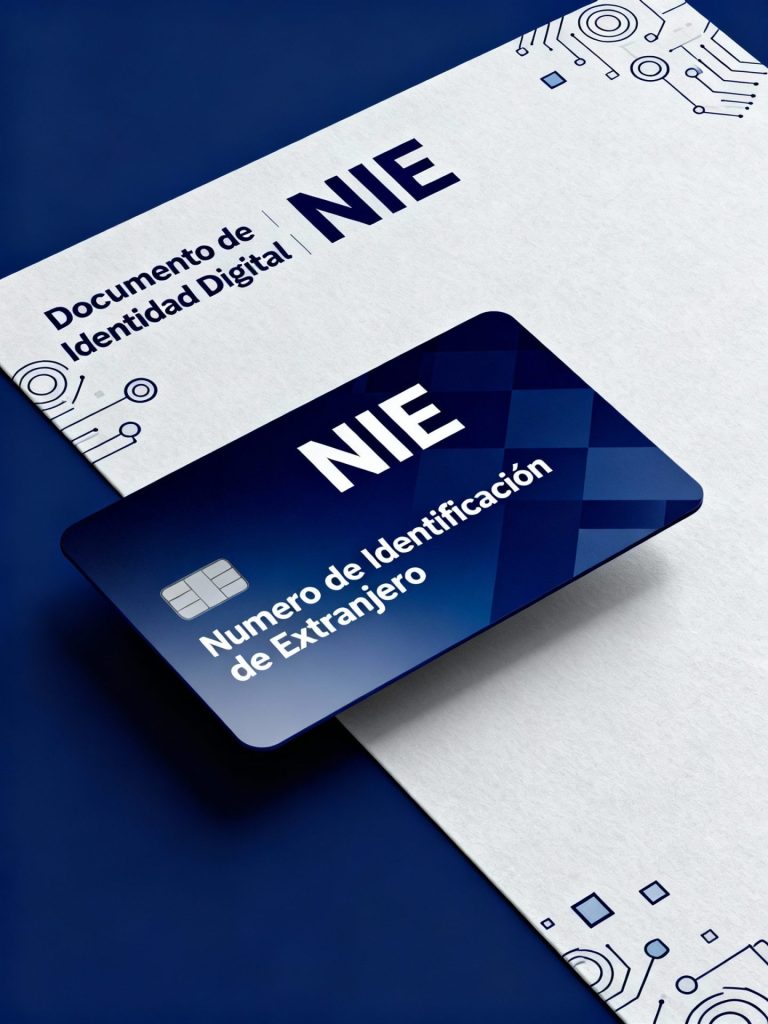
The NIE—Número de Identificación de Extranjero—is essentially your fiscal fingerprint in Spain. If you’re not Spanish, this is your number. Think of it as the key that opens access to the entire Spanish digital and financial ecosystem. It’s not just paperwork; it’s your gateway to working legally, earning money, paying taxes, and operating like a legitimate professional rather than a ghost in the system.
Here’s the thing: Spain actually distinguishes between its own citizens (who get an NIF) and everyone else (who gets an NIE). Spanish citizens carry their tax ID number alongside their national ID card (DNI). You, as a foreigner, get your own system. The NIE is formatted as a letter followed by seven digits and a verification letter—something like X1234567B. It sounds bureaucratic, but it’s designed to slot you into the Spanish system cleanly.
For digital service professionals—developers, writers, designers, consultants, remote workers, or anyone else making money with a laptop—the NIE is non-negotiable. Without it, you literally can’t move forward. Banks won’t touch you. Freelance platforms won’t let you register. Contracts won’t hold legal weight. Tax authorities won’t know you exist. The NIE is the foundation everything else is built on.
Opening a Bank Account: Why Your NIE Becomes Your Ticket to Cash Flow
Let’s be real: as a digital professional, money moves are everything. You need to receive client payments, pay contractors, handle subscriptions, and manage your cash flow. All of that happens through a bank account. And Spain’s banks? They take their paperwork seriously.
Most major Spanish banks—Santander, BBVA, CaixaBank, Sabadell, ING—will ask for your NIE before they’ll even consider opening an account for you. Some might accept your passport temporarily, but eventually (often sooner rather than later), they’ll want that NIE certificate in hand. It’s their defense mechanism against money laundering regulations. They’re not trying to make your life difficult; they’re just following the rules.
Here’s what you’re looking at: a paper NIE certificate (the temporary one you get at your appointment) usually works for initial account opening. Some banks are stricter and want the official physical TIE card (Tarjeta de Identidad de Extranjero), which takes a few weeks to arrive. If you want to skip the back-and-forth, digital banks like Openbank or Bankinter tend to be more flexible. They understand expats better, offer English support, and don’t pull you through the same hoops as the big traditional banks.
Once you’re in—NIE confirmed, account opened—everything becomes simpler. You activate online banking, set up Bizum (Spain’s instant payment system, basically Venmo but better integrated), and suddenly you can manage your entire financial life from your laptop. Client in New York pays you? Done. Need to pay a contractor in Portugal? One click. Want to split dinner with your coworker? Bizum. It’s the backbone of modern Spain’s digital payments.
| Banking Feature | Requires NIE? | Workarounds | Timeline |
|---|---|---|---|
| Standard account opening | Yes (typically) | Non-resident accounts possible temporarily | 3–5 business days |
| Online banking activation | Usually yes | Digital banks may flex temporarily | Immediate after account approval |
| Bizum instant payments | Yes (usually) | Required for seamless payments | 24–48 hours to activate |
| International transfers & SWIFT | Yes (mandatory) | No real alternatives | 1–3 business days per transfer |
| Loan, credit, or mortgage | Yes (absolutely) | Cannot proceed without it | 5–10 business days minimum |

Digital Certificates and E-Signatures: Making Pen and Paper Obsolete
Here’s where Spain actually surprises people with how forward-thinking they are: the entire legal system embraces electronic signatures and digital certificates. A document you sign digitally has exactly the same legal standing as one you sign with a pen. No asterisks. No exceptions. That’s genuinely powerful for remote workers.
To make this happen, you need a digital certificate (Certificado Digital). And yes, the NIE dance starts again—you need your NIE to even apply for one.
The FNMT (Fábrica Nacional de Moneda y Timbre)—Spain’s national mint and official digital certification authority—is who issues these. The process isn’t rocket science, but it does require patience. You request the certificate online using your NIE, then verify your identity in person at an authorized office (usually your local city hall or FNMT branch). About two weeks later, you’ve got a certificate installed on your computer, and you can sign anything digitally.
Why should you care? Because it changes everything. With a digital certificate in your pocket, you can:
- File your tax declarations online without visiting a single office (essential for freelancers)
- Sign contracts and client agreements electronically with legal weight
- Invoice international clients with official digital signatures
- Access Cl@ve, Spain’s ultra-secure government digital identity system
- Register as self-employed entirely online
- Handle 90% of Spanish bureaucracy from your desk at 2 AM in your pajamas
If waiting two weeks feels like too long, there’s a faster alternative: Cl@ve PIN. This is Spain’s government login system that generates temporary verification codes. You can register in person at a tax office or Social Security office in a few hours, or sometimes even apply online if you already have a basic digital setup. It’s less powerful than a full digital certificate, but it covers most everyday stuff—checking your tax status, submitting forms online, accessing government portals.
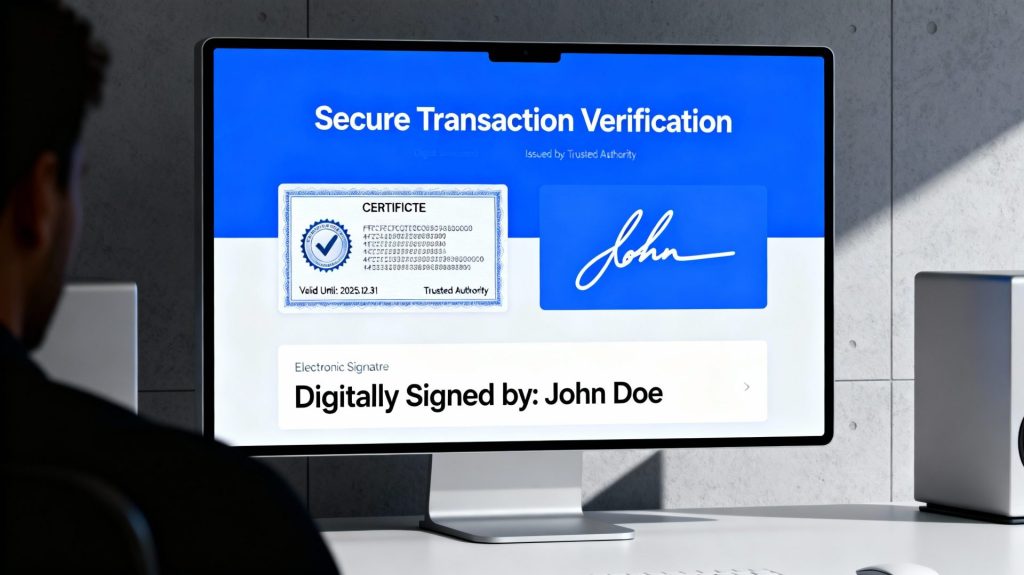
The real beauty? Once you’ve got your digital certificate sorted, you’ve basically unlocked the Spanish digital government infrastructure. You’re no longer a person who needs to visit offices and stand in lines. You’re a person who just… handles things.
NIE for Freelancers: The Autónomo Registration That Actually Makes Sense
If you’re planning to invoice clients in Spain, work with Spanish companies, or establish any kind of formal business presence, you need to register as an autónomo (self-employed). This is where the NIE becomes the cornerstone of your entire operation.
Here’s the actual flow, step by step:
First, you get your NIE. You visit your local immigration office (Oficina de Extranjeros) or the Spanish consulate nearest you. You bring your passport, fill out form EX-15, show proof of address, and explain why you need the NIE—maybe a client contract, maybe just your business plan. You pay about €10. Within hours or a few working days, depending on how busy the office is, you’ve got your NIE certificate.
Then, you register with Spain’s Tax Agency (Agencia Tributaria) using forms Modelo 036 or Modelo 037. This declares your business activity and gets you into the tax system. You’re officially registering your income stream.
Next, you register for social security through RETA (Régimen Especial de Trabajadores Autónomos). This isn’t optional—it’s how you get healthcare, disability coverage, and retirement contributions in Spain. You’ve got about 30–60 days to do this after registering with the tax authority, or they’ll start issuing fines.
Throughout this entire process, your NIE is holding everything together. It’s the thread connecting tax registration to social security to your bank account to your client invoices. Get the NIE sorted, and the rest follows a logical path. Skip it or mess it up, and everything gets tangled.
Real talk: Many digital service providers try to rush through this bureaucratic stuff. Don’t. Getting it right the first time genuinely saves you endless headaches later. The Spanish system is actually quite logical once you understand how the pieces fit together—NIE first, taxes second, social security third. It’s like building a house: foundation, walls, roof. Skip a step or go out of order, and you’ll be rebuilding it later.
Once you’re registered as autónomo, you can invoice clients anywhere in the world. You can deduct business expenses from your taxes. You can hire contractors, buy equipment, and operate like a legit business. As a rule, Spanish tax authorities respect this framework. But—and this is important—always consult with a gestor (a tax advisor, basically your Spanish business translator) to make sure you’re actually compliant. Every situation has quirks, and it’s worth paying someone €50–100 monthly to make sure you’re not accidentally on the wrong side of the law.
How NIE and Cl@ve Work Together (And Why You Need Both)
Here’s something crucial that doesn’t get explained enough: NIE and Cl@ve are partners. You need your NIE to get Cl@ve, and you need Cl@ve (or a digital certificate) to actually do most online stuff in Spain.
Cl@ve comes in three flavors:
- Cl@ve PIN – Temporary, single-use passwords sent to your phone. Good for one-off tasks when you just need quick access. You generate a PIN, use it once, done.
- Cl@ve Permanente – Permanent username and password. Better for regular access. You use the same credentials every time you log into government sites. More convenient if you’re checking your tax status weekly.
- Cl@ve Firma – This one lets you digitally sign documents with actual legal weight. It’s basically Cl@ve on steroids.
You can register for Cl@ve at tax offices, Social Security offices, or even online if you’re already set up with a digital certificate. The whole thing takes anywhere from a few hours to a few days depending on the method.
For digital service professionals, having both tools in your arsenal is smart. Your digital certificate is your heavyweight champion—you deploy it for serious legal and tax matters. Cl@ve is your everyday workhorse. You’re checking your tax filing status online? Cl@ve. Submitting a form to Social Security? Cl@ve. Signing a major contract? Digital certificate. Think of it like having both a screwdriver and a power drill. They do different jobs.
The Tax Reality: What You Actually Owe (Spoiler: It’s Complicated)
Let’s get into the money conversation, because tax implications are where things get real for digital service providers working from Spain.
Your tax situation depends on several factors, especially how many days you’re actually in the country and where your clients are located. Spain considers you tax-resident if you spend more than 183 days per year there. If you hit that threshold, you pay Personal Income Tax (IRPF) on your worldwide income. The rates are progressive: 19% on lower earnings climbing up to 47% on higher income brackets. It stings a bit, but you also get access to Spain’s social services, healthcare, and business ecosystem.
If you’re spending fewer than 183 days in Spain—maybe you’re hopping between countries—you’re technically non-resident. Non-residents pay a flat 24% tax on any income generated in Spain, which sounds worse until you realize that foreign-earned income might not be taxed at all.
Here’s the game-changer: Spain introduced a Digital Nomad Visa specifically designed to attract remote workers. If you qualify, you can apply for what’s often called the “Beckham Law” (yes, it’s named after David Beckham because of a similar tax deal he got back in the day). Under this regime, you can be taxed as non-resident for up to six years at a flat 24% on Spanish-sourced income. Depending on your situation, you might get exemptions on foreign-earned income. For a digital professional earning from international clients while living in Spain? This can be massive.
But here’s the thing: tax law is individualized. Your situation might look different from someone else’s. Double-taxation treaties, freelance status, client location, visa type—it all matters. Don’t guess. Talk to a qualified tax specialist. Seriously. Spending €300 on good advice is infinitely cheaper than paying back taxes, penalties, and interest later.
Getting Your NIE: The Actual Practical Steps
Enough theory. Let’s talk real steps, because when you actually need to do this, you need to know what paperwork to bring and where to go.
Step 1: Gather your documents
- Valid passport (needs at least 6 months before expiration)
- Two recent passport photos (4×4 cm, typical EU size)
- Completed EX-15 form (available on the Spanish Ministry of Interior website—seriously, just download it)
- Proof of address in Spain (rental contract, utility bill, or empadronamiento certificate—basically proof you actually live somewhere)
- Proof of why you need the NIE (your employment contract, client agreement, business proposal—whatever justifies your need)
- Payment receipt from Modelo 790, Código 012 (shows you paid the €10 application fee)
Step 2: Book your appointment
Don’t just show up. Spain requires a cita previa (prior appointment). Go to sede.policia.nacional.gob.es, select your province, and book a time slot at your nearest immigration office or police station. This mandatory booking system usually has openings within 1–3 weeks. If you’re abroad, contact your nearest Spanish consulate to book.
Step 3: Show up prepared
Bring originals and photocopies of everything. Bring way more copies than you think you’ll need. The officials will review your documents, verify your identity, ask you a few questions (often in Spanish, so bring a translation app if needed), and either hand you your NIE on the spot or tell you to come back in 5–10 days. If they hand it to you immediately, celebrate—it means you got it right.
Step 4: If you’re processing from abroad
Contact your nearest Spanish consulate early. Get the same documents notarized or officially translated as needed (requirements vary by country). Expect processing times of 3–5 weeks. Your NIE will typically be sent by email or physical mail once approved.
Why This Matters Right Now for Digital Service Providers
Here’s the reality: Spain’s digital economy is booming. The government actively courts remote workers and digital entrepreneurs through favorable visa programs and incredibly simplified registration processes. This isn’t an accident. Spain wants your talent and your tax euros.
But here’s the catch: you can’t participate in any of it without the NIE. It’s the gatekeeper. No NIE means no bank account. No bank account means no way to receive payments legally. No legal payment structure means you’re operating in a gray zone that could eventually blow up in your face.
Whether you’re planning to spend a year, five years, or forever in Spain, getting your NIE sorted should be your first priority after finding accommodation. It might not be glamorous, but it’s the move that unlocks everything else. Once that NIE is in the system, you can open your bank account, apply for your digital certificate, register as self-employed, and start operating confidently within the Spanish and European digital economy. You’re no longer technically invisible. You’re a legitimate professional.
Frequently Asked Questions
Q: Do I need the actual TIE card or will a paper NIE certificate work for banking?
A: A paper NIE certificate typically works for initial account opening, though some traditional banks are becoming stricter and requesting the physical TIE card (Tarjeta de Identidad de Extranjero). Check with your chosen bank beforehand to avoid reopening accounts later. Digital banks and online-first institutions are usually more flexible about accepting the certificate temporarily while your physical card is being processed.
Q: How long does it actually take to get an NIE?
A: If you apply in Spain, you can receive it immediately or within 5–10 working days, depending on your local immigration office’s efficiency and current workload. If applying through a Spanish consulate abroad, expect 3–5 weeks plus mail transit time. Regional variations exist—major cities like Madrid and Barcelona typically process faster than smaller towns.
Q: Is it actually possible to open a bank account without an NIE?
A: Technically possible for non-residents using a Certificado de No Residente (non-resident certificate), but this is limited and temporary. Most Spanish banks require an NIE for standard accounts with full functionality. Some digital banks offer more flexibility initially, but long-term operations and higher transaction limits require an NIE.
Q: Do I need a digital certificate just to start freelancing in Spain?
A: Not strictly mandatory to begin operations, but highly recommended. Many admin tasks—especially tax filing and business registration—become significantly easier with one. If you plan to invoice Spanish clients or handle important legal documents, a digital certificate saves you countless trips to government offices.
Q: Is the NIE different depending on whether I’m a remote worker versus an employee?
A: The NIE itself is identical regardless of employment type. The difference lies in how you register afterward. Remote workers typically register as autónomos (self-employed) or as non-residents, while traditional employees register through their employer’s paperwork. The NIE application process remains the same for everyone.
Q: What does the NIE actually cost to obtain?
A: The application fee is minimal, typically around €10. You might incur additional costs for photocopies, passport photos, or official translations depending on your situation and location. Consular applications abroad might have slightly different fee structures; check directly with your nearest consulate.
Last updated: 05.12.2025