


















Spain · NIE · Tax & Accounting service
NIE Number Spain — Spanish NIE Application Service
The Spanish NIE — Número de Identificación de Extranjero, or Foreigner Identification Number — is the permanent identification number issued by Spain's Dirección General de la Policía, part of the Policía Nacional, to foreign nationals with economic, professional, or social ties to Spain. It is used for official transactions such as buying property, opening a bank account, paying taxes, registering a business, or dealing with Spanish authorities.
- Certified Tax & Accounting professionals
- License No. 62802L
- Since 2013

- 17,000+ served online
- #1 Accounting Firm in Spain
- Support in all languages
What clients say
Key Takeaways
- The NIE is permanent: the number is assigned once and does not change when you move, change jobs, buy property, or open new accounts in Spain.
- Foreign nationals usually need it before formal Spanish transactions: property purchase, banking, tax registration, company formation, inheritance, employment administration, and many digital public services.
- There are three main routes: apply in Spain, apply through a Spanish consulate abroad, or appoint an authorized representative to handle the Spain-side process.
- The core file usually includes EX-15, Tasa 790-012, passport copy, and proof of reason: see the NIE application guide for the full document checklist.
- e-residence can prepare and manage the process for you: the final route and quote depend on your case, documents, country, and timeline. Request a personalized quote.
Who Needs a Spanish NIE Number and How to Obtain It
Most foreign nationals need an NIE before they can complete formal legal, tax, financial, or property-related transactions in Spain. This includes non-residents buying a holiday home, foreign founders registering a company, international heirs receiving Spanish assets, students handling university paperwork, and residents starting work or tax registration.
The NIE is not the same as the NIF, TIE, or DNI. The difference between NIE and NIF matters because the same number may function as a tax identifier once the foreign national is registered with Spanish tax authorities. The TIE card is a physical residence card for non-EU residents; it displays the NIE number but has its own validity and renewal rules. The DNI is the national identity document for Spanish citizens.
EU, EEA, and Swiss citizens follow a separate registration route if they live in Spain for more than three months. They usually receive the NIE Verde for EU citizens, officially the Certificado de Registro de Ciudadano de la Unión Europea. The certificate contains the same permanent NIE number, but the procedure and document requirements are different from a standard non-resident NIE blanco.
Ready to start? See the complete NIE application guide for documents, routes, and common mistakes.
What Can You Use a Spanish NIE For?
| Situation | Why the NIE is required |
|---|---|
| Buying or selling property | Used by the notary, land registry, tax authorities, and bank in the transaction |
| Opening a bank account | Spanish banks identify foreign customers by NIE |
| Tax registration and filings | The NIE functions as the tax identifier for foreign nationals |
| Registering a company or as autónomo | Required for founders, directors, and freelancers |
| Inheritance of Spanish assets | Heirs need an NIE before accepting Spanish assets |
| Employment administration | Employers and social security reference the NIE |
| Utilities, telecoms, and digital public services | Contracts and e-government portals request the NIE |
Need an NIE for a specific purpose? See the NIE for property purchase guide, Spanish bank account guide, or company registration guide.
Three Ways to Apply for a Spanish NIE
There is no single route that fits every applicant. The best option depends on where you are, why you need the NIE, how complete your documents are, and whether representation is suitable for your case.
| Route | Where it happens | Best suited for |
|---|---|---|
| In person in Spain | Police office (Oficina de Extranjería / Comisaría) with a cita previa appointment | Applicants already in Spain who can attend an appointment |
| Spanish consulate abroad | The Spanish consulate serving your country of residence | Applicants abroad who prefer the official consular route |
| Authorized representative in Spain | A duly authorized representative acts under a specific Power of Attorney | Applicants who cannot travel and whose case can be handled by a representative |
For a complete step-by-step process, documents checklist, form guidance, and common mistakes, see the Spanish NIE application guide.
How Our NIE Service Works
The e-residence team helps foreign nationals prepare and manage their Spanish NIE application with professional support. Depending on your case, the process may be handled in person, through a Spanish consulate, or through a duly authorized representative in Spain.
- We review why you need the NIE. Property purchase, company registration, inheritance, banking, employment administration, or another official reason. This determines the best route and the supporting documents required.
- We check the document route. Some cases can be handled through an authorized representative under a specific Power of Attorney. Others may require a consulate or in-person appointment.
- We prepare the application file. This may include EX-15 data, Tasa 790-012 instructions, passport copy requirements, evidence of why you need the NIE, and guidance on apostille or sworn translation where relevant.
- You sign the required documents. If the Power of Attorney route is appropriate, we provide the document wording and signing instructions.
- We manage the Spain-side process. Where representation is accepted, the authorized representative handles the relevant steps with the Spanish office.
- You receive your NIE certificate or next-step guidance. Once issued, the NIE number is permanent. If the authorities request clarification or additional documents, we explain what is needed.
For urgent cases, see the fast-track NIE options or request a personalized quote.
Your NIE order, one swipe away
Add your order to Apple Wallet at checkout. The pass updates as your application moves — and the moment your NIE is issued, the QR on the pass opens your document.
Live status on the pass — no email digging, no login.
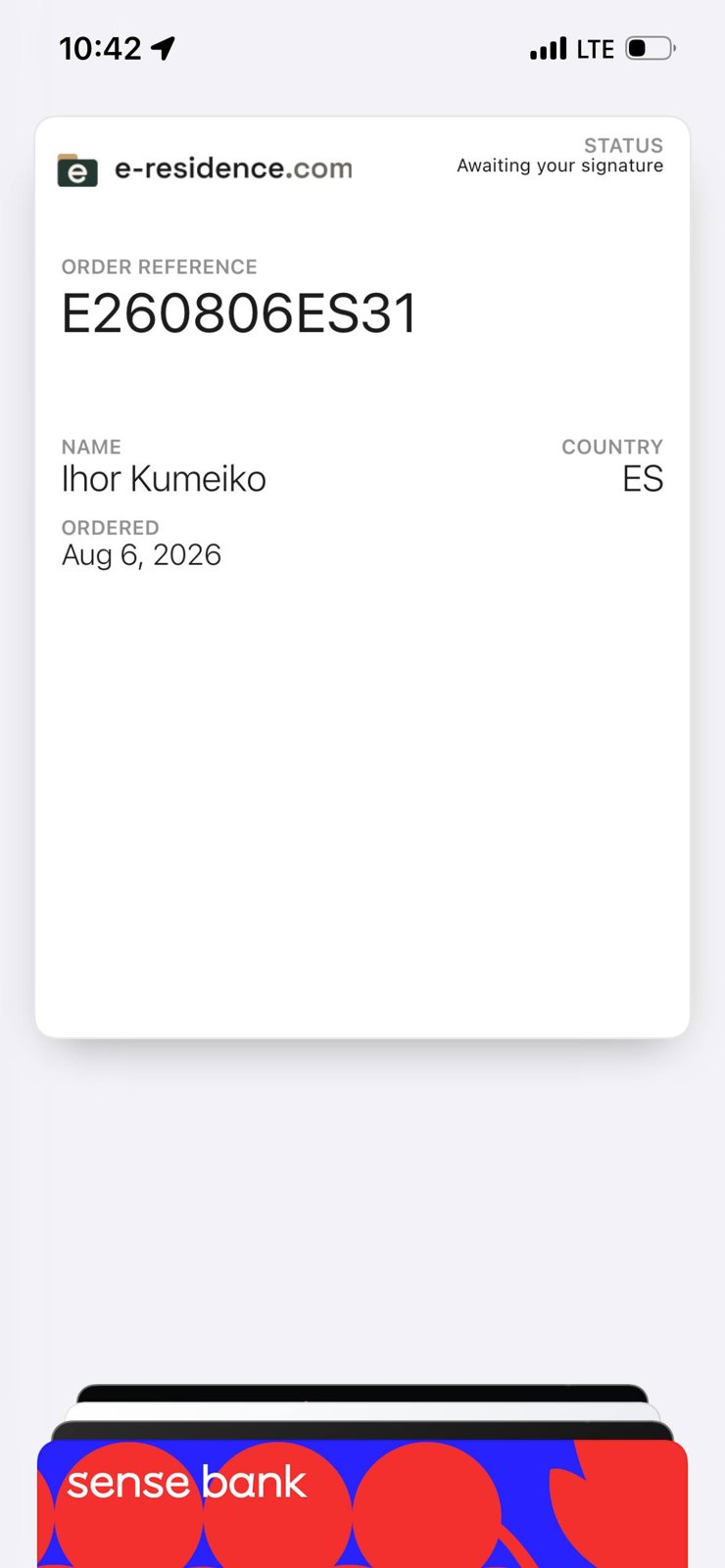
 e-residence.comStatusIssuedNIEY0000000-ZAlex CarterESAug 7, 2026Scan to open your NIE document
What We Can and Cannot Guarantee
What we can help with
We can help you choose the right route, prepare the application file, review the supporting documents, draft or coordinate the Power of Attorney where appropriate, guide you on apostille and sworn translation requirements, and manage the Spain-side process through an authorized representative where representation is accepted.
What cannot be guaranteed
No provider can guarantee a specific appointment date, a same-day result, or approval in every case. Timing and outcome depend on appointment availability, the completeness of your documents, the legal reason for requesting the NIE, the practice of the relevant police office or consulate, and any additional checks requested by Spanish authorities.
What Affects Your Personalized Quote?
Every NIE case is different. The final quote depends on your location, application route, supporting documents, urgency, and whether a Power of Attorney, apostille, legalization, or sworn translation is required.
| Factor | How it affects your case |
|---|---|
| Your location | Determines whether the consulate or representative route applies |
| Application route | In-person, consular, and representative routes involve different steps |
| Supporting documents | Apostille, legalization, or sworn translation may be needed |
| Urgency | Fast-track handling depends on appointment and office availability |
| Power of Attorney | Remote cases require a specific PoA prepared and signed correctly |
The mandatory Spanish government fee (Tasa 790-012) is included in our pricing. Additional costs may apply for Power of Attorney, apostille, sworn translation, or courier services depending on your case. To avoid misleading estimates, e-residence provides a personalized quote after reviewing your case.
NIE by City
Need city-specific guidance? These local pages explain the appointment route, office notes, document preparation, and remote representative options for major Spanish destinations. For other cities, e-residence can assess whether the representative route is suitable for your case.
NIE Guides and Resources
Apply for Your Spanish NIE with Professional Support
Need an NIE for property, banking, inheritance, business registration, tax, employment administration, or another Spanish procedure? Share your case details with e-residence and the team will review the best route, required documents, and whether a representative application is suitable. The final quote depends on your route, documents, country, and urgency, and no fixed result date can be guaranteed before your case is reviewed.
Request a personalized quote- Personal review of your case and reason for the NIE
- Best route and required documents confirmed
- A personalized quote after your case is reviewed
Frequently asked questions about the Spanish NIE
What is an NIE number in Spain?
The NIE is Spain's permanent identification number for foreign nationals. Its full Spanish name is Número de Identificación de Extranjero. It is used for legal, tax, property, banking, business, and many public administration procedures.
Does the Spanish NIE expire?
The NIE number itself does not expire. It is assigned once and remains the same. Some documents that display the NIE, such as a TIE residence card or a recent certificate copy requested by your bank, may have their own validity rules, but the number does not change. See the NIE expiration guide for the full explanation.
Can I apply for an NIE without traveling to Spain?
In many cases, yes. A duly authorized representative can handle the Spain-side process under a specific Power of Attorney where representation is accepted. The exact route depends on your country, documents, and reason for the NIE. See the NIE via Power of Attorney guide.
What documents are usually needed for a Spanish NIE?
A standard file usually includes the EX-15 application data, proof of payment for the Tasa 790-012 government fee, a valid passport or ID document, and a written reason supported by documentation. Some cases require apostille, legalization, or sworn translation. See the complete NIE application guide.
Is the EX-15 the correct NIE form?
Yes, EX-15 is the standard form for NIE assignment and certificates. EU citizens registering residence use EX-18. Non-EU residents applying for a TIE residence card use EX-17. Using the wrong form can delay or invalidate the application.
What is the difference between NIE and TIE?
The NIE is the identification number. The TIE is a physical residence card for non-EU residents. A TIE card displays the NIE number, but it is a separate document with its own validity and renewal rules.
What is the difference between NIE and NIF?
The NIE is the foreigner identification number. The NIF is the tax identification number used by the Spanish tax system. For many foreign nationals, the NIE number is also used as their NIF once they interact with tax authorities. See the NIE vs NIF guide.
Do EU citizens need an NIE in Spain?
EU, EEA, and Swiss citizens who stay in Spain for more than three months usually register for the Certificado de Registro de Ciudadano de la Unión Europea, often called NIE Verde. This certificate includes the NIE number. See the NIE Verde guide for EU citizens.
Can I get an NIE for buying property in Spain?
Yes. Foreign buyers generally need an NIE before completing a Spanish property transaction. The NIE is used by the notary, tax authorities, land registry, bank, and other parties involved in the transaction.
How long does it take to get an NIE?
Timing varies. The main variables are appointment availability, application route, document readiness, consulate or office practice, and whether extra clarification is requested. No provider can guarantee the same timing for every case. See the NIE timeline guide.
Can e-residence guarantee my NIE will be approved?
No provider can guarantee approval in every case because the decision depends on Spanish authorities and the quality of the application file. e-residence can help prepare the documents, select the route, manage the process, and reduce avoidable errors.
How do I start with e-residence?
Start by submitting your case details through the assessment form. The team will review why you need the NIE, where you are located, whether representation is appropriate, and which documents are needed before you proceed.
Can I apply for an NIE number completely online?
There is no fully automated government portal for every applicant. If you are outside Spain or cannot attend an appointment, a representative can submit the application under a specific Power of Attorney, which keeps the process remote on your side. See the complete NIE application guide for the full route comparison.
What are the document requirements for a Spanish NIE?
A typical file includes the EX-15 application data, proof of payment for Tasa 790-012, a valid passport or ID, and a documented reason. Some cases need apostille, legalization, or sworn translation. EU citizens follow a different route through the NIE Verde guide.
How do I book an NIE appointment in Spain?
Appointments (cita previa) are booked through the official channels of the relevant office. Availability varies by city and season, and some offices release slots at set times. See the NIE appointment guide for preparation notes.
Can I get an NIE in Mallorca, Valencia or Palma?
Yes. The same NIE rules apply, but the local office, appointment availability, and practical steps depend on the province. For other cities, e-residence can assess whether the representative route suits your case.
How do I get an NIE from the UK or Ireland?
You can apply through the Spanish consulate serving your place of residence or use a representative route handled in Spain. Consulates in London, Manchester, Edinburgh and Dublin each set their own appointment and document rules. See the consulate guide for details.
How can I get an NIE faster?
Speed depends on appointment availability, document readiness, the route chosen, and whether the office requests clarifications. A prepared file and the representative route can reduce avoidable delays, but no provider can guarantee a fixed date. See the fast-track NIE options.
How do I check or read my NIE number?
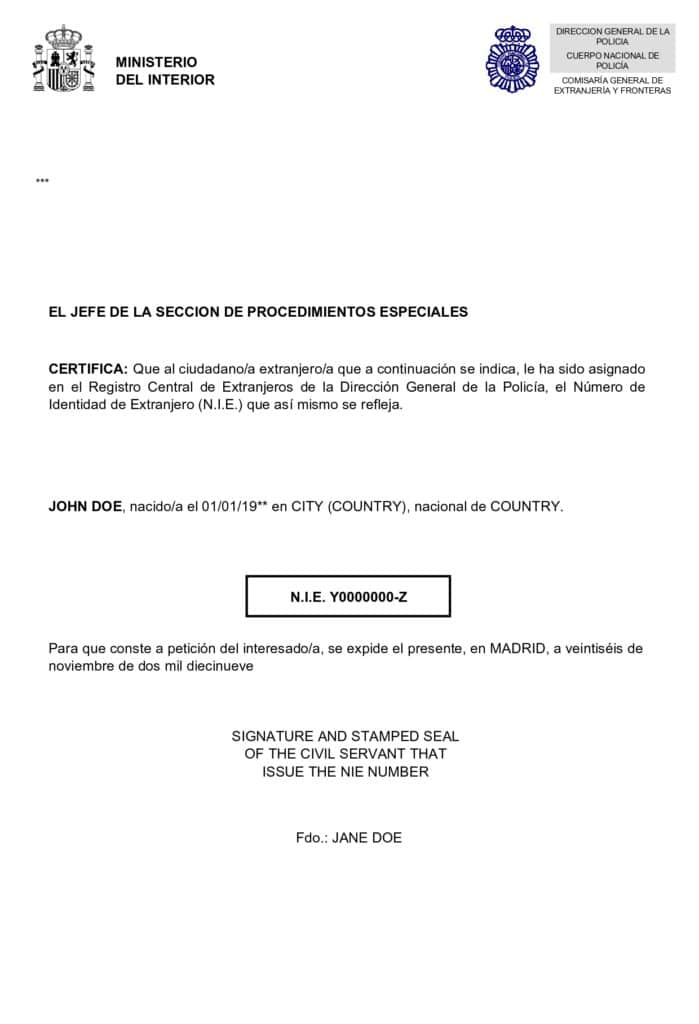
A Spanish NIE starts with X, Y or Z, followed by seven digits and a control letter. You can find it on your NIE certificate, TIE card, tax documents, or official correspondence. See the NIE document example for a visual reference.
What does the NIE document or card look like?
A white NIE certificate is an A4 sheet from the Spanish Police. Non-EU residents receive a TIE card, a physical plastic card that displays the same NIE number and has its own expiry date. See the NIE document example for a visual reference.
What to Do After Getting Your NIE?
- Starting to work independently? See autónomo registration and ongoing tax obligations.
- Buying property? See property tax and accounting support.
- Need help with Spanish taxes? Explore our accounting services.
NIE Spain: Quick Reference
| Item | Fact |
|---|---|
| Full name | Número de Identidad de Extranjero |
| Issued by | Dirección General de la Policía, Policía Nacional |
| Validity | Permanent — the number itself does not expire |
| Standard form | EX-15 |
| Government fee form | Tasa 790-012 |
| Common uses | Property, banking, tax, company registration, employment, utilities, digital services |
| Main routes | In Spain, consulate abroad, representative via POA |
| EU citizens | NIE Verde — Certificado de Registro de Ciudadano de la UE |
| Non-EU residents | TIE card displays the NIE number |
Reviewer and Sources
Reviewed by: E-Residence Team · License No. 62802L · Last updated:
Spanish NIE procedures, appointment availability, and document practices can vary by office, consulate, and applicant profile. Always check official sources and obtain case-specific advice before submitting documents.
Official sources
- Dirección General de la Policía / Policía Nacional — NIE procedures and forms
- Sede Electrónica Policía Nacional — Tasa 790-012
- Cita previa portal — appointment booking
- BOE — Spanish legal texts (Real Decreto 1155/2024)
- Ministerio de Asuntos Exteriores — consular and sworn translation information