


















How to Issue Recibos Verdes on Portal das Finanças
In this article
Recibos verdes is the common name for fiscal documents issued by self-employed people through the Portuguese Tax Authority. The first decision is not which option looks easiest: it is whether payment happens at the same time as the service.
Before you issue the first document
For recurring self-employment, submit a declaration of commencement of activity to the Tax Authority before starting. The current route is in the Portal das Finanças under Atividade → Submeter declarações — início, alteração e cessação. An ato isolado is a separate route for a genuinely occasional transaction and should not be treated as a substitute for predictable recurring work.[3]
You also need access to the Portal das Finanças. The current official guide lists authentication with a Cartão de Cidadão, Chave Móvel Digital, or your NIF and Portal password.[2]
Fatura, recibo or fatura-recibo?
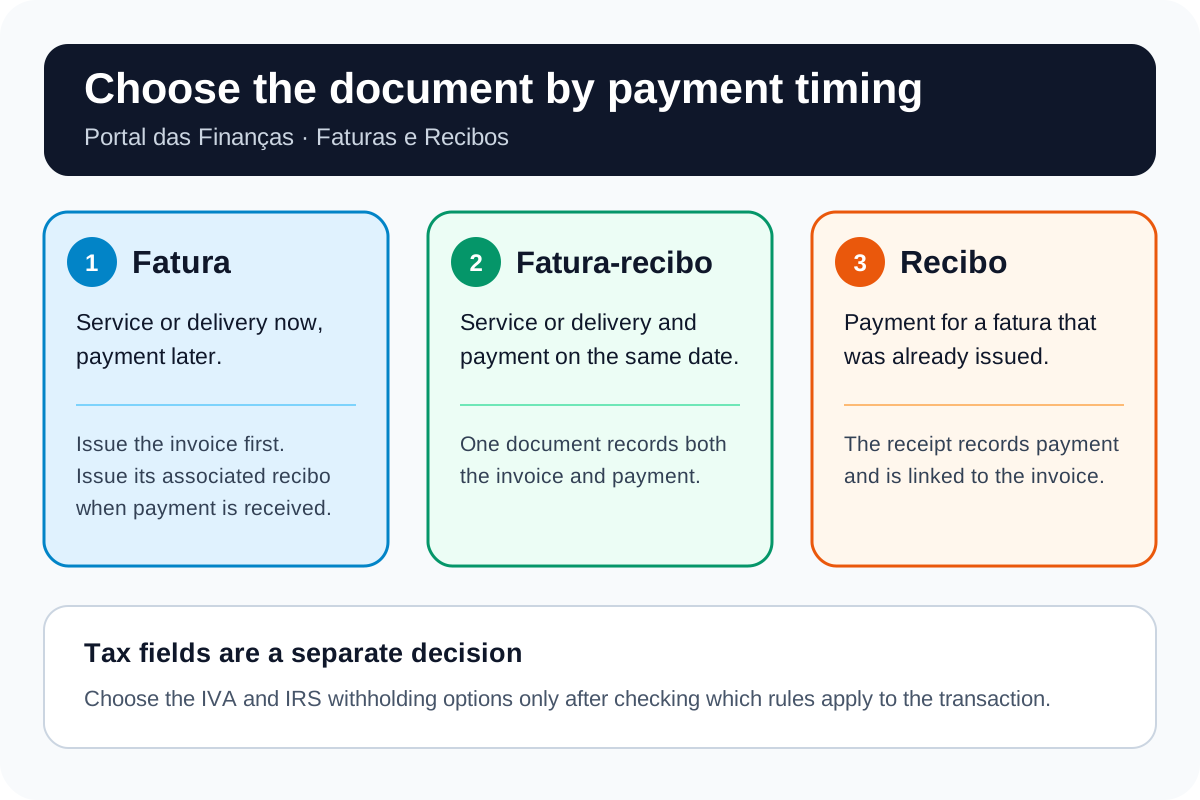
- Fatura: use it when you provide the service now and payment will arrive later. When you receive all or part of the payment, issue the associated recibo.
- Recibo: use it when the client pays an existing fatura. It records the payment and remains associated with that fatura.
- Fatura-recibo: use it when the service and payment happen at the same time. One document records both the invoice and receipt.
These distinctions come directly from the Tax Authority’s current Fatura e recibo page and service guide.[1][2]
Invoice deadline
As a rule, issue the invoice by the fifth business day after providing the service. If the client pays before the ordinary invoice deadline, issue the invoice on the date of the advance payment.[1]
Step by step in Portal das Finanças
- Sign in with a Cartão de Cidadão, Chave Móvel Digital, or NIF and Portal password.[2]
- Search for Faturas e Recibos and select Aceder, or use Serviços Tributários → Serviços → Faturas e Recibos.[2]
- Open Emitir. Choose Fatura ou Fatura-Recibo, or choose Recibo for an existing unpaid fatura.[2]
- Enter the transaction date and select the CAE/CIRS activity that applies to the service.[2]
- Identify the client. For a foreign client, the current ATGO guide asks for the foreign tax identification, name and country; it describes the address as optional.[8]
- Select the reason for issue and describe the service. The description is mandatory and should identify the service provided.[2]
- Complete the VAT and IRS fields only after checking the rules that apply to your activity, client and transaction.
- Review the information and select Emitir. Use Consultar in the same service to review documents already issued.[2]
VAT: what the €15,000 threshold does — and does not — mean
Article 53 of the Portuguese VAT Code currently sets a €15,000 annual domestic-turnover threshold. For a person established or domiciled in Portugal, the exemption also requires that the other conditions in Article 53 are met, including the restriction on export operations or connected activities. In the start year, the estimate for the remainder of the calendar year is used.[3][4]
When Article 53 applies, the invoice is issued without VAT and carries the wording “IVA – regime de isenção”.[1] However, turnover alone does not determine the correct field:
- an activity may fall under a different exemption, including Article 9;
- the normal VAT regime may apply;
- cross-border services require a place-of-supply check under Article 6 and its exceptions.[7]
The current AT start-activity guide also distinguishes two threshold events. If the previous year’s turnover was above €15,000 but did not exceed €18,750, the normal regime starts on 1 January of the following year after the required alteration. If turnover exceeds €18,750 during the current year, VAT starts with the invoice that crosses that amount and the alteration declaration is due within 15 business days.[3] Check the current rule before relying on either amount.
IRS withholding: check eligibility before selecting an exemption
The optional withholding exemption in Article 101-B of the IRS Code refers to expected eligible Category B income below the Article 53 threshold — currently €15,000. It cannot be used when the previous year’s relevant income was equal to or above the threshold, excludes commissions for intermediation in contracts, and ceases in the month after the limit is reached.[5]
The current service guide says the IRS withholding field is relevant when the client has or should have organised accounts and the income is from services.[2] Rates depend on the activity and income type.[6] If you are unsure, confirm the treatment before issuing instead of choosing a dropdown option from turnover alone.
Foreign clients
For a foreign client, enter the foreign tax identification, name and country. The current ATGO guide treats the address as optional.[8] This identifies the client; it does not settle the tax treatment. VAT place of supply depends on factors such as whether the transaction is B2B or B2C, the client’s establishment and the type of service.[7]
Checking expenses is a different e-Fatura task
This guide is about issuing documents to your clients. If you want to check invoices issued to you, classify a personal or professional expense, or register a missing purchase record for the IRS workflow, see our e-Fatura invoice-checking guide.
Segurança Social is a separate obligation
Issuing documents and the tax fields are only the Tax Authority side. Contributions, the quarterly income declaration and exemptions belong to Segurança Social — see our Social Security guide for recibos verdes.
Correcting a mistake
The Tax Authority’s July 2026 instruction separates tax-value corrections from formal errors:[9]
- if the taxable amount or VAT changes, issue the appropriate credit note or debit note and reference the original invoice;
- for a formal error such as the NIF, address or description that does not change the taxable amount or VAT, annul the incorrect invoice and issue a corrected one while preserving the original transaction date;
- a credit note is not a general way to cancel an invoice.
If a VAT return has already been submitted, the correction may create additional steps. Confirm the case with a certified accountant.
For annual filing support, see the E-Residence Portugal annual tax return service.
Frequently asked questions
Do I need to open activity before issuing recibos verdes?
For recurring self-employment, yes. Submit a declaration of commencement of activity to the Tax Authority before you start. An ato isolado is a separate route for a genuinely occasional transaction, not a substitute for predictable recurring work.[3]
Should I issue a fatura, recibo or fatura-recibo?
Use a fatura when the service and payment do not coincide, then issue its associated recibo when payment arrives. Use a fatura-recibo when the service and payment coincide. The timing — not convenience — determines the document.[1][2]
What is the deadline for issuing the invoice?
As a rule, issue it by the fifth business day after providing the service. If the client pays in advance, issue the invoice on the advance-payment date.[1]
Does turnover below €15,000 always mean that I do not charge VAT?
No. €15,000 is the current domestic turnover threshold in Article 53 of the VAT Code, but the exemption has other conditions. Another exemption, the normal regime or cross-border place-of-supply rules may apply, so do not choose the VAT field from turnover alone.[1][3][4][7]
When can I choose no IRS withholding?
For eligible Category B income, the Article 101-B exemption is optional when expected annual income is below the Article 53 threshold, currently €15,000, and the previous-year condition is met. It excludes certain commissions and ends in the month after the limit is reached. The payer and income type also matter.[2][5][6]
Can I issue a recibo verde to a foreign client?
Yes. The current ATGO guide asks for the foreign tax identification, name and country and describes the address as optional. A foreign address alone does not determine VAT or withholding treatment.[7][8]
How do I correct an issued document?
If the taxable amount or VAT changes, issue the appropriate credit or debit note referring to the original invoice. For a formal error such as the NIF, address or description, annul the incorrect invoice and issue a corrected one. A credit note is not a general cancellation tool.[9]
Official sources
[1] Autoridade Tributária — Fatura e recibo
[2] Autoridade Tributária — Faturas e Recibos: service guide (PDF)
[3] Autoridade Tributária — Starting self-employed activity: IRS and VAT guide (PDF)
[4] Portuguese VAT Code — Article 53
[5] Portuguese IRS Code — Article 101-B
[6] Portuguese IRS Code — Article 101
[7] Portuguese VAT Code — Article 6
[8] Autoridade Tributária — ATGO user guide (PDF)
[9] Autoridade Tributária — Invoice correction procedures, Circular 25120/2026 (PDF)